
AI Business Transformation: Key Lessons from Microsoft, Lenovo, Mercedes-Benz
Companies like Lenovo, Mercedes-Benz, and Microsoft are realizing AI business transformation by enhancing customer support, improving customer interactions, and addressing AI biases and regulations.
By Paul Estes

How can AI transform your business? AI business transformation is occurring in a wide range of sectors and is expected to grow annually at 37.3% from 2023 to 2030. Generative AI is being adopted rapidly, with about 65% of financial leaders integrating it into their strategies. According to Leinar Ramos, Senior Director Analyst at Gartner, "Generative AI is acting as a catalyst for the expansion of AI in the enterprise. This creates a window of opportunity for AI leaders and a test on whether they can capitalize on this moment and deliver value at scale."
Businesses must address the main obstacles in adopting this technology to realize AI business transformation from generative AI. Three key hurdles are identifying valuable use cases, managing expectations, and ensuring security and ethical use.
The process of AI adoption begins with identifying valuable use cases. Generative AI is most effective in areas like customer operations, marketing and sales, software engineering, and R&D. These sectors account for 75% of the value that generative AI can deliver. Organizations need to pinpoint where AI business transformation can maximize their return on investment (ROI).
Next, setting realistic expectations is vital for AI business transformation. While 56% of organizations see inaccuracy as a considerable risk and 34% worry about workforce displacement, these concerns can be managed by setting clear expectations and addressing issues proactively. A smooth transition with clear communication can help enterprises gain support from stakeholders.
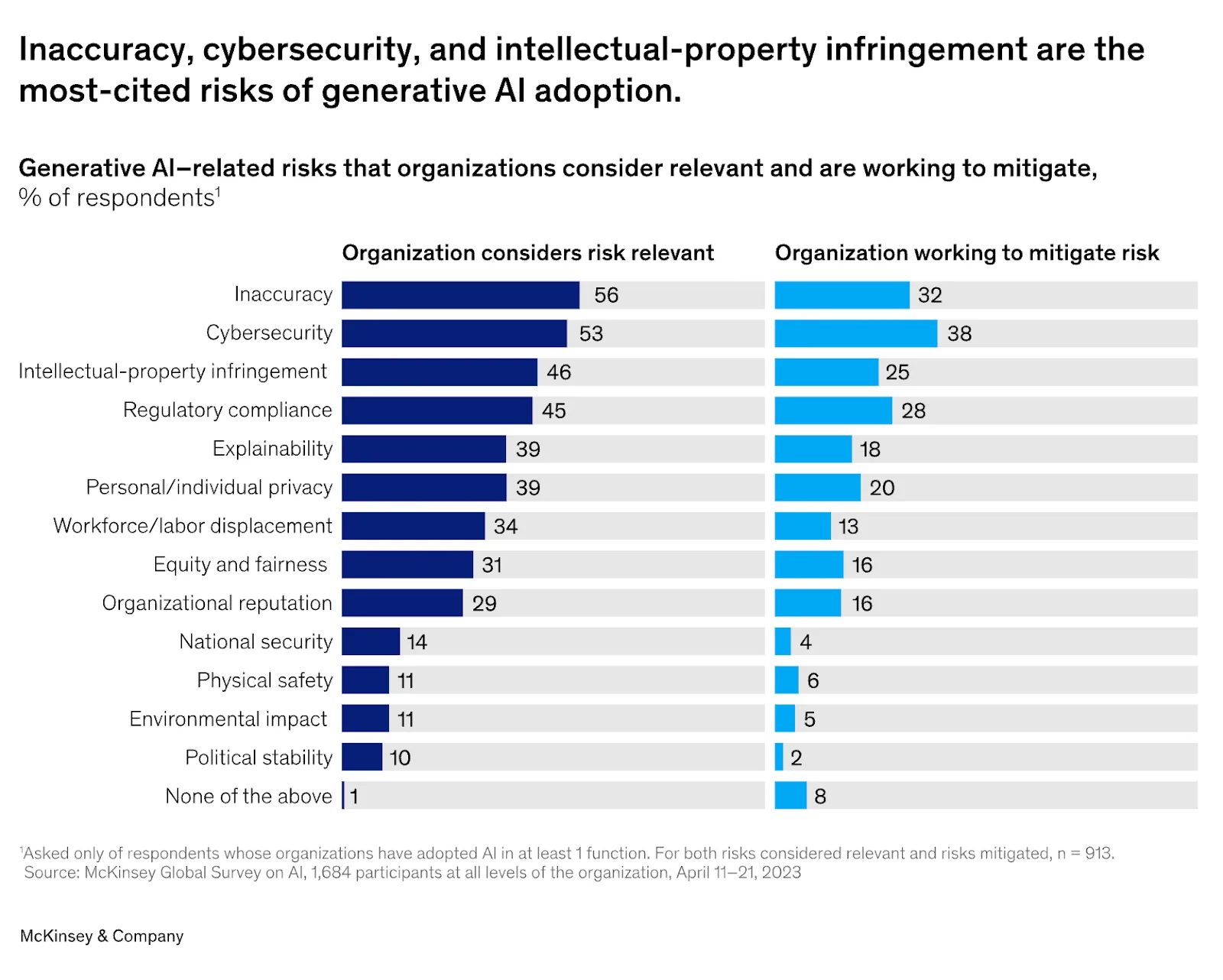
Once you have valuable use cases and stakeholders on board with your plan for AI business transformation, reinforcing security and ethical use is paramount. Over half (53%) of organizations consider cybersecurity risks a significant concern. Andrew Frost Moroz, founder of Aloha Browser, advises, "Many corporations have expressed significant concerns about employees using AI models to help with their work because workers may not consider how the model is using that information for training purposes." There’s a clear need for stringent security measures to protect against threats and data breaches.
This article will provide insights into effective AI business transformation, considering the three critical hurdles of AI adoption: use case identification, expectation management, and security and ethical considerations. By overcoming these challenges, businesses can make the most of generative AI, build customer loyalty, boost revenue, and stay competitive.
Strategic AI Deployment: Identifying Generative AI Key Use Cases and Learning from Lenovo
Eighty-six percent of IT leaders expect generative AI to soon play a significant role in their organizations. As AI business transformation’s potential becomes evident, businesses focus on identifying high-impact use cases and aligning AI initiatives with their goals to achieve real value and growth. A crucial part of this process is assessing ROI and feasibility and having a clear roadmap for implementation.
Lenovo is an excellent example of a company that has strategically identified where they need to use AI and adopted it successfully. They face the dual challenge of managing a vast, intricate IT landscape while delivering high-quality, efficient customer support.
Their IT operations include an extensive on-premises and hybrid cloud infrastructure spanning 23 data centers across four continents, requiring significant maintenance, compliance, and security resources. Lin Qiyu, Director of Lenovo IT Operations and Maintenance Management, shares, “Lenovo’s hybrid cloud landscape is only getting larger and more complex, which puts great pressure on our team. By using GenAI to rise to an even higher level of automation and intelligence in ITOps, we can keep up with growing complexity without an exponential increase in headcount.”
Similarly, Lenovo recognized the potential for generative AI to transform customer support's speed, quality, and efficiency. Positive experiences in the contact center drive loyalty, making excellence in customer support a critical factor in long-term business success. As Sourav Ganguly, AP Premier Support Director, highlights, the fundamental goals in contact-center operations have remained consistent over the past decade: delivering the best possible customer satisfaction while maximizing operational efficiency. Lenovo’s customer support system handled millions of interactions across various channels, including online chat, voice, email, and social media platforms. This volume requires swift and accurate responses to maintain customer satisfaction and loyalty.
To tackle these challenges, Lenovo implemented generative AI agents in two key areas:
Software Engineering
- Generative AI Solution: Lenovo used generative AI agents to improve the speed and quality of code production by automating routine coding tasks and providing intelligent code suggestions. These AI tools could analyze existing codebases, understand coding patterns, and offer real-time recommendations.
- Benefits: In this case, AI business transformation improved the efficiency of their software engineering teams, freed up engineers to focus on innovative and high-value tasks, and enhanced code quality by ensuring consistency and reducing human errors. Arthur Hu, CTO of Lenovo’s Solutions and Services Group, commented, “Our people are already getting 10 percent improvements, and we’re seeing that increase to 15 percent as teams get better at using gen AI agents.”
Customer Support
- Generative AI Solution: Lenovo deployed a large language model (LLM)- enhanced bots to handle customer interactions across online chat, voice, and email, managing 70 to 80 percent of interactions without human intervention. The bots address queries, troubleshoot issues, and provide real-time solutions.
- Benefits: This led to significant productivity gains in call handling time and improved overall customer satisfaction by up to 10%, as Linda Yao, COO and Head of Strategy noted: “We’re seeing double-digit productivity gains on call handling time.” It also allowed support staff to focus on more complex customer issues, enhancing the quality of service.
Realistic Goals for AI Business Transformation: The Ask Mercedes Story
While AI tools can automate tasks like content generation and customer interactions, they have limitations, such as hallucinations. It’s essential to manage expectations before AI business transformation. According to McKinsey, companies with effective two-way communication are four times more likely to succeed in change programs. Educating stakeholders and employees about AI ensures better integration and realistic goal setting, leading to more effective use of AI tools.
For instance, IBM is setting realistic expectations with its AI solutions. One example is their collaboration with Mercedes-Benz to develop the Ask Mercedes virtual assistant. Mercedes-Benz needed to help drivers access information about their vehicles quickly and easily. Traditional car manuals are often cumbersome and underutilized, leaving drivers to guess or search for answers to common questions like "How do I turn on my rear defroster?" or "What type of fuel does this car need?" A lack of immediate, user-friendly support could lead to frustration and a suboptimal customer experience, especially as vehicles become more feature-rich and complex.
To address this, Mercedes-Benz partnered with IBM to create the “Ask Mercedes” virtual assistant, using IBM Watson conversational technology and the IBM Cloud. The AI-powered chatbot is designed to cover about 100 of the most commonly asked questions about Mercedes-Benz vehicles. It helps drivers get immediate responses through an app or via Facebook Messenger, making information accessible on multiple platforms. The virtual assistant answers specific queries about vehicle functionalities and provides general information about Mercedes features. It uses multimedia content, such as graphics or drawings, to deliver more precise answers.
If the chatbot cannot answer a question, it refers the user to additional information or the call center. While AI enhances customer service, this approach to AI business transformation ensures the chatbot acknowledges its limitations and provides alternative support when necessary.

Building Trust in AI: How Microsoft Tackled Bias in Facial Recognition
A survey shows that about one in seven respondents are either somewhat or very unlikely to trust businesses that use AI. This lack of trust highlights the importance of addressing ethics, data security, privacy, and bias during AI business transformation. Understanding these challenges and implementing solid strategies to mitigate them is key for businesses to gain and maintain trust in AI solutions.
Microsoft's approach to handling bias in their AI facial recognition systems provides a great example of building trustworthy AI. Microsoft’s facial recognition technology had a higher error rate for women and people with darker skin tones. Such biases can lead to severe consequences, including racial profiling and discrimination, eroding public trust in AI technologies.
To handle these issues, Microsoft focused on reducing bias and enhancing accuracy across all demographics. They expanded and revised their training and benchmark datasets to include a more diverse range of skin tones, genders, and ages, ensuring the AI system could accurately recognize and classify different demographic groups. Additionally, new data collection efforts specifically targeted underrepresented groups, improving the training data's representativeness and the system's overall accuracy.
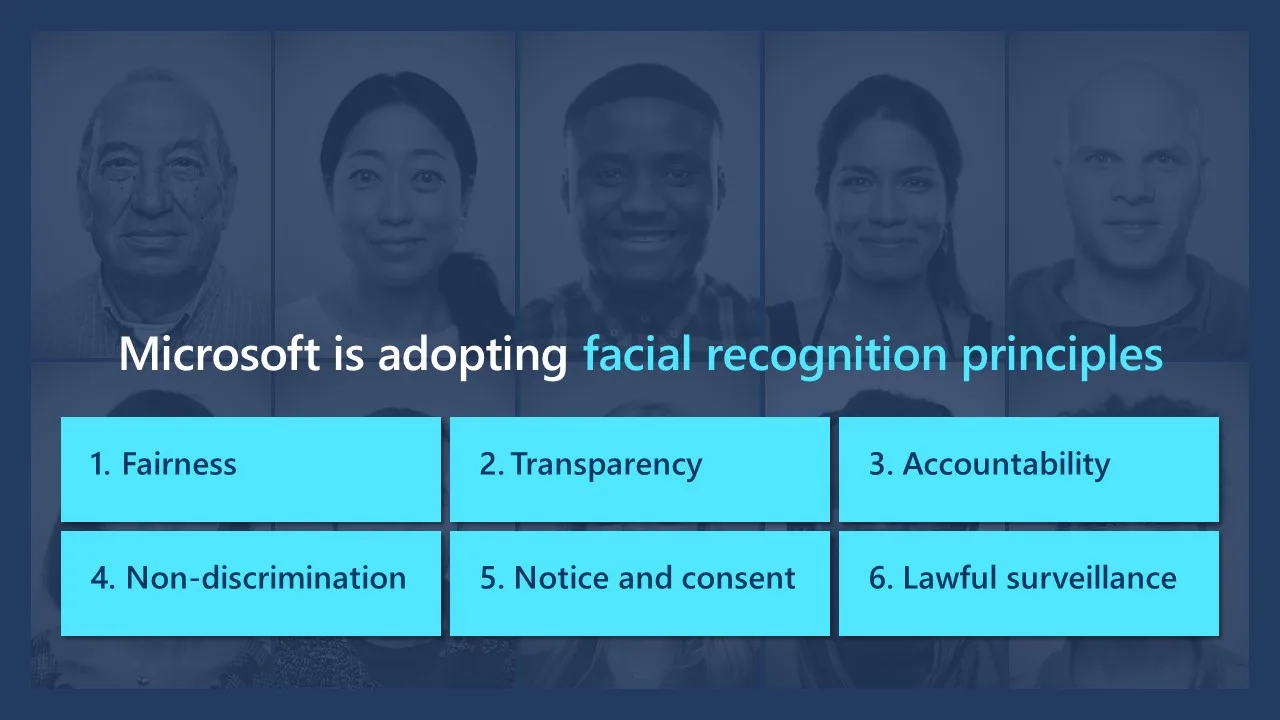
Microsoft also made technical adjustments to improve its gender classifier, allowing it to recognize genders across all skin tones more accurately. These efforts led to significant improvements. Microsoft reported that error rates for men and women with darker skin were reduced by up to 20 times, and error rates for all women were reduced by nine. Overall, the accuracy differences across demographics were significantly minimized, showcasing a more balanced and fair AI system.
Hanna Wallach, a senior researcher in Microsoft’s New York research lab and an expert on fairness, accountability, and transparency in AI systems, emphasized, “This is an opportunity to think about what values we are reflecting in our systems and whether they are the values we want to reflect in our systems.
Adopting AI Where It’s Needed Makes It Valuable
AI business transformation is rapidly metamorphosizing industries, with companies like Lenovo, Mercedes-Benz, and Microsoft leading by addressing key challenges and implementing effective strategies. These organizations demonstrate the importance of identifying valuable AI use cases, managing expectations, and ensuring security and ethical use to drive business value and build trust in AI technologies.
“This next generation of AI will reshape every software category and every business, including our own,” wrote Microsoft CEO Satya Nadella. “Although this new era promises great opportunity, it demands even greater responsibility from companies like ours,” he added.
Enterprises must remember that they are integrating powerful technologies that require careful consideration, such as a clear roadmap, ongoing education, and robust ethical frameworks to ensure responsible AI business transformation. By prioritizing these principles, business leaders can navigate the complexities of AI integration, safeguard against potential risks, and maximize its benefits for society.