
Does AI in Consulting Spell Democratization … or the End?
The consulting industry is at a pivotal moment where AI democratizes access to high-level expertise and capabilities. New data from 384 industry experts reveals that small, AI-powered teams can now compete with traditional consulting giants, deliveri
By Iwo Szapar

Does AI in Consulting Spell Democratization … or the End?
I asked 384 consultants, and here is the answer…
A two-person consultancy wielding AI in consulting could soon outbid McKinsey for Fortune 500 contracts
- Female consultants are 30% more ahead of the curve, using AI for creative problem-solving at dramatically higher rates
- AI tools are saving consultants nearly 13 hours per week while slashing project costs by up to 90%
Editor’s Note: A version of this piece originally appeared in two parts on Work Smarter with AI.
What is the future of AI in consulting?
Let me put it this way:
It will soon be possible for a two-person AI-powered consultancy to outbid McKinsey for a Fortune 500 contract. Sound far-fetched? Think again.
My journey into this rabbit hole started on a sunny day in Madrid—the South Summit 2024 was in full swing.
I'd just wrapped up my last meeting of the day. Sweat-soaked and brain-fried, I caught a phrase that cut through the haze:
"80% of consulting will vanish because of AI."
B.S., I thought. Then I paused.
What if it's true? What if maybe—instead of killing consulting—AI could do the opposite … democratize it?
You’re about to read a data-driven journey into AI’s effect on consulting—major shifts, trends in consultants who leverage AI, the economics behind these shifts, barriers, and the path forward.
These takeaways are the combination of 384 conversations with consultants, loads of data, and these sources:
- In-person interviews with 32 subject matter experts at South Summit 2024.
- AI-Assisted Interviews with 145 consultants on their “AI predictions for the consulting industry” (June- August, 2024).
- AI Maturity Index (AIMI): Data from 206 AI-assisted interviews with consultants benchmarked to 1,822 interviews with other knowledge workers (August- November 2024).
Let’s dig in.
AI in Consulting: Tectonic Shifts
We're moving from the “knowledge” to the “allocation” economy in consulting. In this new paradigm, success means acquiring critical knowledge and effectively leveraging AI to apply that knowledge at scale.
Due to this paradigm shift, six fundamental shifts are occurring in the consulting landscape, each powered by AI's democratizing force:
- SMB Market Explosion: As small and medium businesses (SMBs) rush to automate with AI, they turn to consultants who understand their unique needs. Smaller consulting firms, often more attuned to SMB challenges, are perfectly positioned to capture this burgeoning market. This year (2025), 74% of SMB leaders expect revenue increases.
- Productization of Services and Price Reduction: AI enables consultants to standardize and scale their offerings, reducing costs. High-quality consulting becomes accessible to a broader range of clients, allowing smaller firms to compete on price without sacrificing quality.
- Scalable Expertise: AI allows small firms to punch above their weight. A two-person team armed with the right AI tools can now compete for contracts that previously required armies of analysts.
- Democratized Data Insights: Firms can use AI in consulting to harness data-driven insights once exclusive to large consultancies. Small teams can now offer Fortune 500-level analytics to businesses of all sizes.
- Niche Domination: AI facilitates the rise of ultra-specialized micro-consultancies. These firms can leverage AI to become unrivaled experts in niche industries or specific problem areas, outperforming generalists.
- Reduction in Need for Junior Staff: With AI automating routine tasks, there's less need for large teams of junior consultants. This levels the playing field for smaller firms that couldn't previously afford extensive staffing.
How Consultants Are Using AI
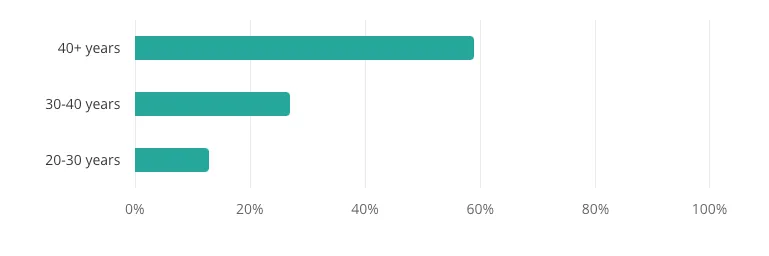
The AI Maturity Index reveals that consulting's AI transformation is well underway, though unevenly distributed. Despite consultants averaging 40+ years in age, nearly half (48%) use AI tools daily, with the most experienced professionals embracing technology at rates 25% higher than their younger colleagues—challenging traditional narratives about technology adoption amongst younger generations.
Female consultants are leading the creative AI revolution, 30% more likely to leverage these tools for idea generation and client deliverables. Meanwhile, the psychological benefits are becoming apparent as consultants report 30% less stress and 45% better work-life balance thanks to AI. However, with consultants ranking only third in innovation scores (40/100) and fourth in psychological impact (59/100), substantial untapped potential remains for firms willing to bridge the implementation gap.
Here are some other notable takeaways about how consultants are using AI:
- Consultants save an average of 12.9 hours weekly using AI tools
- Only 45% use AI for predictive analysis and risk assessment
- 38% of consultants report feeling more confident in their deliverables with AI
- 75% use AI for brainstorming but only 31% for project planning
- Consultants rank 2nd in decision-making scores (25/100), utilizing only a quarter of AI's potential
But on the horizon are AI agents. And as their use becomes widespread, the consulting transformation will only accelerate.
The Accelerative Thrust of AI Agents
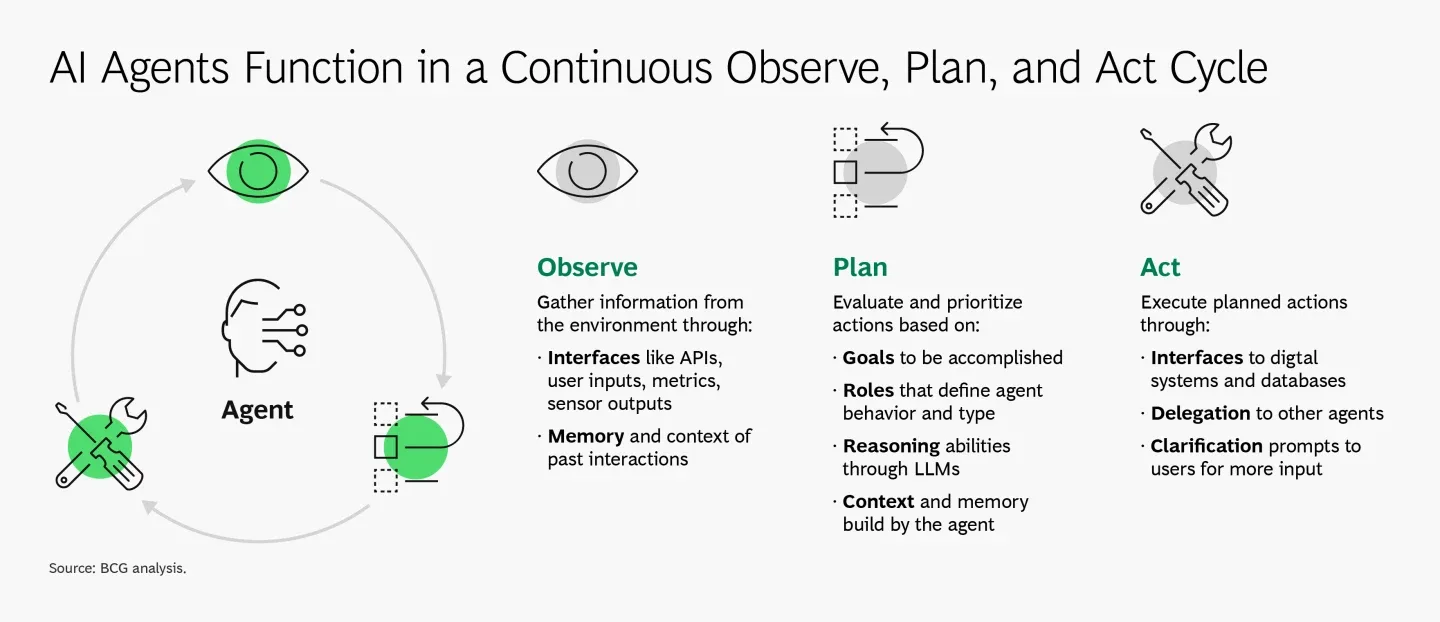
AI agents are quickly accelerating capabilities for AI in consulting, streamlining complex workflows, managing complete processes independently, and allowing consultants to dedicate more time to strategic analysis and planning.
BCG describes an “Observe, Plan, Act” cycle that demonstrates the potential for AI agents. AI systems are bridging the gap between knowledge and execution—they’re now active partners in work processes.
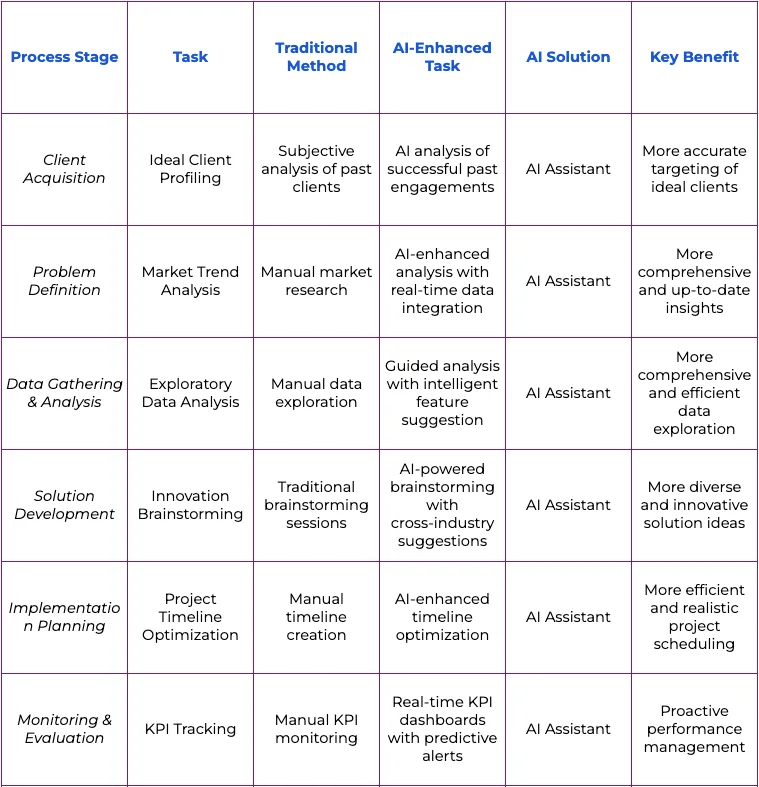
In combination with agentic AI, tasks enhanced by AI are reshaping each stage of the consulting process, opening new doors for agile, innovative firms ready to embrace the future. Here are a few examples of what that transformation looks like:
The Next Five Years: How This All Plays Out
Despite high awareness (95%) and interest (88%) in AI, only 48% of consultants use AI daily. Before we can realize AI's full potential in consulting, we must address five key barriers:
- Skill and Training Barriers: 30% of consultants need formal training to leverage AI tools fully.
- Trust and Reliability Concerns: 35% struggle with output validation and verification.
- Integration Challenges: 40% report difficulties integrating AI into existing workflows.
- Ethical and Compliance Concerns: 22% express concerns about bias in AI-generated content.
- Psychological Barriers: 25% worry about job security and skill obsolescence.
Here’s how I see AI playing out in consulting in the next five years:
1. The Era of "Moonshot Thinking"
AI dramatically alters the consulting landscape by significantly reducing the time and resources needed to execute ambitious initiatives. The recent launch of OpenAI's o1-preview model exemplifies this shift, with consultant Shep Bryan testing o-1 preview by demonstrating how it generated a comprehensive strategy deliverable in one request—a task that would typically require an entire McKinsey team to complete.
Similarly, Claude Artifacts enables consultants to create interactive documents, data visualizations, and website designs without extensive technical expertise. This democratization of advanced capabilities raises questions about the traditional value of experience, potentially disrupting consulting hierarchies as "moonshot" projects become accessible to smaller teams.
2. AI-Augmented Services Will Dominate
Pat Grady, Partner at Sequoia Capital, emphasized this shift: "One of the big opportunities for AI is to replace services with software." This reflects the emergence of several key service models in consulting:
- Customized AI Advisory Platforms: Bespoke AI systems tailored to client needs that offer real-time analytics and insights.
- Example: An AI platform for manufacturing clients that continuously monitors production processes and optimizes supply chains.
- AI-Enhanced Decision Support Systems: Tools that simulate business scenarios to aid strategic choices.
- Example: AI models that project market entry impacts while adjusting for variables like currency fluctuations.
- Virtual AI Consulting Assistants: AI systems providing continuous expertise to clients.
- Example: 24/7 access to AI that answers questions outside scheduled consulting sessions.
- AI-Powered Transformation Services: Using machine learning to identify inefficiencies.
- Example: Automated discovery processes for AI maturity assessment.
- Predictive Analytics and Risk Management: Advanced services identifying opportunities before they materialize.
- Example: AI systems scanning global data to predict reputational risks.
3. Less Humans, More Agents
Anthropic's breakthrough in AI system capabilities (14.9% success rate, rising to 22% with additional steps) signals a fundamental shift in work coordination through a "New Management Stack":
- Strategic Layer (Human): Vision setting, stakeholder management, novel problem framing, and ethical oversight.
- Coordination Layer (AI): Resource optimization, timeline management, cross-functional coordination, and real-time performance monitoring.
- Execution Layer (Human + AI): AI-augmented analysis, human-guided implementation, hybrid quality control, and adaptive execution.
The Path Forward
The consulting industry stands at the cusp of a revolution where new revenue models are emerging beyond hourly billing, centered on scalable solutions and continuous value. Those who invest in continuous learning to stay ahead of AI developments while building technical and soft-skill expertise will be positioned to deliver Fortune 500 insights with startup-sized teams.
The future isn't humans versus AI, but humans and AI versus complex problems. This AI revolution represents the most significant opportunity in consulting since the invention of the spreadsheet—a chance to solve previously unsolvable problems with unprecedented efficiency and insights.
DM me on LinkedIn to chat about this 🙂