
AI Business Integration for Enterprise Market ISVs
For Independent Software Vendors (ISVs) targeting enterprise organizations, the question of AI business integration is crucial.
By Paul Estes

For Independent Software Vendors (ISVs) targeting enterprise organizations, the question of AI business integration is crucial.
As Richard Potter, CEO and co-founder of Peak, puts it, "AI will change the way we work and run our businesses in the same way that the introduction of the internet did. AI decision-making in particular has the potential to raise global economic output, and is projected to add a staggering $13 trillion [some projections are even higher] to the global economy by 2030."
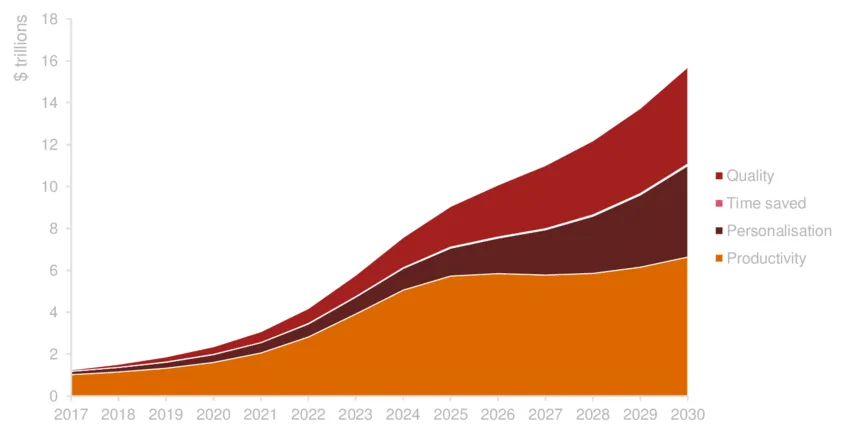
This presents a daunting array of challenges for ISVs. They must navigate the complex transition to cloud-based models, differentiate in an increasingly crowded market, and expand globally—all while balancing innovation with development costs and pricing pressures. Security, performance, and the modernization of legacy applications add further complexity. The war for AI-informed talent is fierce, and sales and marketing strategies must evolve to effectively communicate the value of AI-enhanced products to skeptical enterprise decision-makers.
For ISV leaders, the message is clear: master AI integration or risk irrelevance in the rapidly evolving enterprise software landscape. Below, explore the current state of AI in enterprise software, examine successful case studies of AI business integration, and discover strategies for ISVs looking to thrive in this new paradigm.
The Enterprise AI Landscape: A Battlefield of Innovation
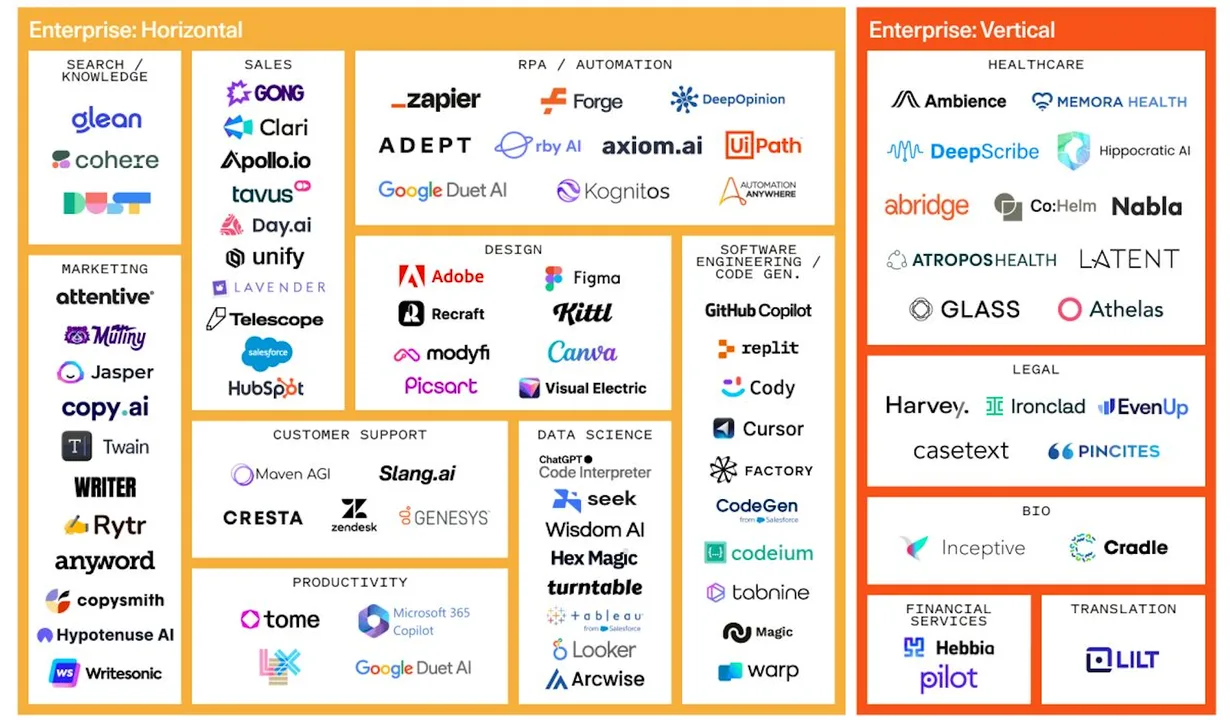
The enterprise landscape is evolving at breakneck speed. Vertical-specific AI applications are leading the charge, with companies like Abridge and Ambience revolutionizing healthcare workflows and Harvey and EvenUp transforming legal case management. Avalara and Anaplan are leveraging AI to redefine financial planning and tax compliance in finance.
But it's not just startups making waves. Tech giants are throwing their considerable weight behind AI integration. Salesforce is weaving AI throughout its CRM ecosystem, SAP infuses its ERP and analytics platforms with AI smarts, and Oracle is turbocharging its database and business applications with AI capabilities.
Frank Slootman, CEO at Snowflake, underscores the transformative potential:
"AI and machine learning are transforming the way organizations analyze and derive insights from data."
For ISVs, this rapidly shifting landscape presents both opportunity and threat. The key lies in identifying niche applications where AI can deliver tangible value to enterprise clients, while simultaneously fending off competition from both upstarts and established players.
Case Study: SymphonyAI—Redefining Financial Crime Prevention
SymphonyAI’s AI integration began with a critical challenge facing the financial services industry: the overwhelming task of combating financial crimes. Banks, insurers, and other financial institutions were drowning in a sea of alerts related to potential money laundering, fraud, and sanctions violations. The sheer volume of these alerts, coupled with evolving compliance requirements and regulatory obligations, pushed investigation teams to their limits, leading to inefficiencies, increased costs, and potential oversights.
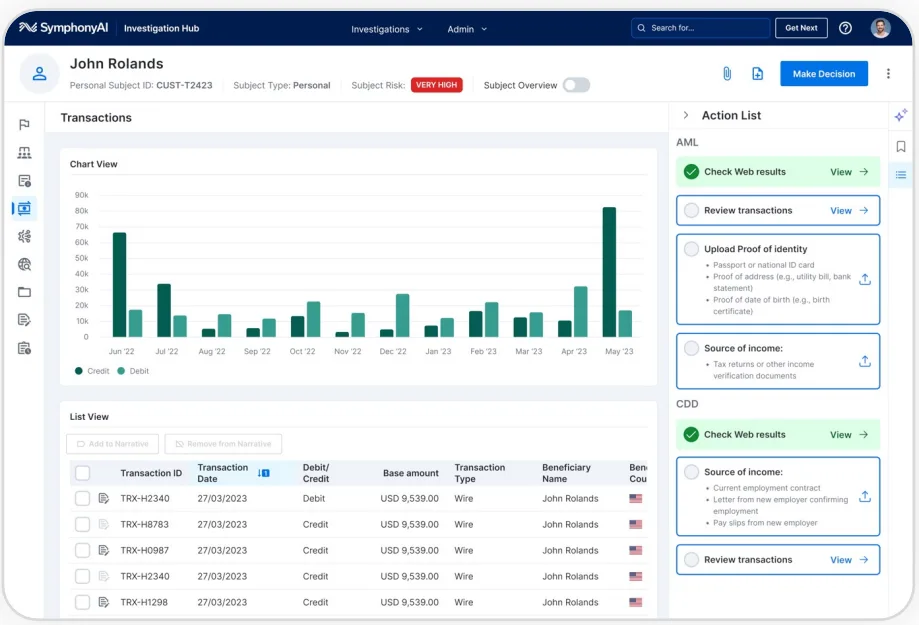
Recognizing this pain point, SymphonyAI developed Sensa Copilot, an AI-powered assistant designed to revolutionize financial crime prevention. By partnering with Azure OpenAI services, they created a sophisticated system capable of automatically collecting, collating, and summarizing critical financial and third-party information. The team prioritized adaptability, ensuring the solution could be applied across various financial services sectors. They also strongly emphasized security and user experience, building robust data protection features and an intuitive interface that would enhance, rather than complicate, investigators' workflows.
The results of SymphonyAI's strategic AI integration were impressive: Sensa Copilot reduced human time and effort in financial crime investigations by up to 70%, allowing institutions to manage their large volume of alerts more effectively. This enhanced efficiency not only improved the ability to detect and prevent financial crimes but also significantly reduced costs associated with compliance and investigations. By automating routine tasks, the solution freed investigators to focus on higher-value analytical work, enhancing the overall quality of investigations and improving risk mitigation capabilities.
Case Study: CallMiner—AI-Driven Customer Insights at Scale
CallMiner's approach to AI business integration originated as a solution to a pressing business problem: improving customer satisfaction and retention. By framing their AI capabilities in terms of tangible business outcomes, they were able to cut through the AI hype and demonstrate real value to enterprise decision-makers, offering another valuable template for ISVs targeting the enterprise market: analyzing support conversations at scale.
The key to CallMiner's success lies in its strategic integration of Azure AI Speech: transforming vast amounts of unstructured voice data into actionable insights—a capability that struck a chord with enterprises struggling to make sense of their customer interactions.
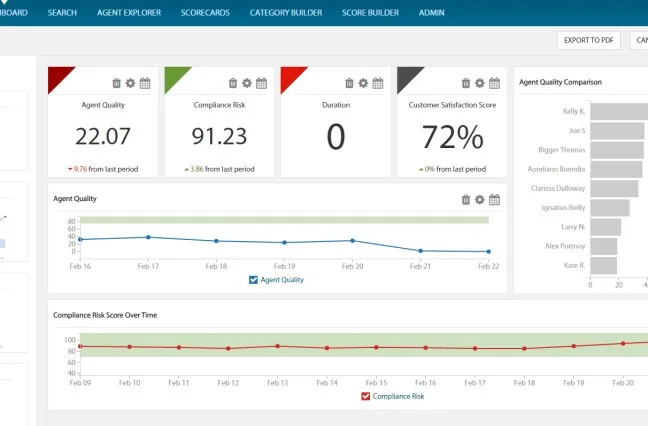
But CallMiner's AI business integration went beyond just implementing cool technology. They tackled enterprise-specific challenges head-on. Recognizing that data privacy was also a major concern for potential clients, they built robust anonymization features into their AI pipeline. To address scalability concerns, they designed their platform to handle massive volumes of data without compromising performance.
For ISVs, CallMiner's success underscores the importance of thoughtful AI integration. It's not enough to just implement AI—you need to do so in a way that addresses specific enterprise pain points and delivers measurable ROI.
Strategies for Successful AI Business Integration in Enterprise Products
For ISVs looking to replicate the successes of SymphonyAI and CallMiner, a strategic approach to AI business integration is crucial. Here are key considerations:
- Focus on industry-specific challenges: Generic AI solutions rarely cut it in the enterprise market. Successful AI integration requires a deep understanding of industry-specific pain points and regulations.
- Prioritize seamless workflow integration: Enterprise clients aren't looking for standalone AI tools. They want solutions that integrate smoothly with their existing workflows and systems.
- Make security a cornerstone: In the age of data breaches and privacy regulations, robust security isn't just a feature – it's a prerequisite for enterprise AI adoption.
This perspective highlights another crucial aspect of AI integration for ISVs: usability. Enterprise solutions need to harness the power of AI without overwhelming users with complexity.
Conclusion: The AI Business Integration Imperative for ISVs
ISVs must embrace a mindset of continuous innovation. Juergen Mueller, CTO at SAP, captures this imperative:
"Today's dynamic technology and business landscape means every developer needs to be an AI developer."
For ISVs targeting the enterprise market, successful AI business integration is rapidly becoming a make-or-break proposition. The challenges are significant, from technical hurdles and market competition to changing client expectations. But for those who can navigate these challenges, the opportunities are immense. The key lies in strategic AI business integration—not just implementing AI for its own sake, but doing so in ways that address specific enterprise pain points, enhance existing workflows, and deliver measurable ROI.