
AI Cost Crisis? 4 Strategic Pillars Every CFO Needs Now
77% of organizations invest in AI, but few achieve true cost efficiency. Our 4-pillar framework helps CFOs balance strategic AI investments with governance, talent development, and phased implementation for maximum ROI.
By Paul Estes

AI cost considerations can make or break an organization's digital transformation journey. But what separates organizations that achieve 200%+ ROI on AI from those whose digital transformation initiatives become expensive failures? As enterprise leaders seek revenue growth and operational efficiency, the tension between achieving immediate cost reductions through automation and the potential displacement of human workers creates complex strategic decisions.
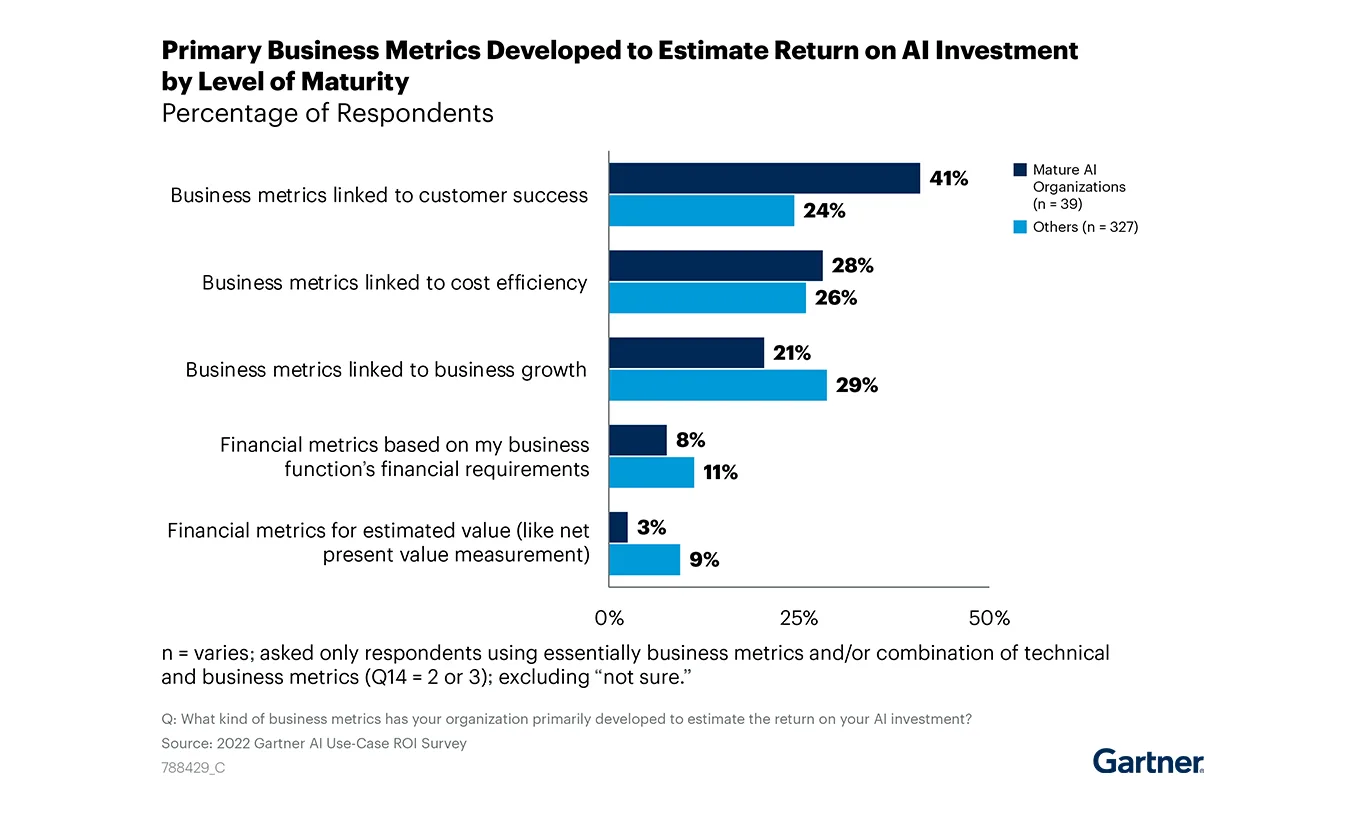
A staggering 77% of organizations have already invested in AI technologies, yet many struggle to translate these investments into tangible business outcomes. And according to Gartner, 28% of AI-mature organizations utilize cost-efficiency metrics as a primary determinant for estimating AI ROI. The proof of potential is compelling: Meta witnessed a remarkable 201% increase in net income following its strategic pivot toward AI-driven operational efficiency, demonstrating how well-implemented AI strategies can dramatically enhance bottom-line results.
With CFOs increasingly accountable for AI cost efficiency amid skyrocketing implementation expenses, the ability to navigate four critical pillars of strategic AI adoption has become the defining factor in organizational success. AI cost efficiency has become mission-critical in realizing an AI-powered future. This article details the following:
- How differentiating between traditional and generative AI and reframing AI investments leads to cost efficiency.
- Why governance frameworks prevent costly AI failures and reduce expenses.
- How balancing external expertise with internal upskilling maximizes AI cost returns.
- Why phased implementation with focused pilot projects yields superior financial outcomes.
- How continuous monitoring mechanisms reduce AI total cost of ownership.
.
Pillar 1: Traditional v.s. GenAI—It Matters for AI Cost Efficiency
Traditional AI systems excel at clearly defined tasks within structured data environments, delivering predictable cost savings through automation. In contrast, generative AI (GenAI) creates new content, understands context, and operates across unstructured data, enabling novel applications that can transform entire business processes and create new revenue opportunities.
This distinction is crucial for cost-efficiency planning. While traditional AI typically delivers immediate, measurable cost reductions through automation, GenAI's ROI often materializes through enhanced capabilities and revenue generation rather than direct cost cutting. Organizations that recognize this difference can develop more realistic cost-benefit analyses and implementation timelines, avoiding the disappointment of misaligned expectations.
Enterprise-grade GenAI solutions can cost up to $30 per user monthly, but additional factors include:
- Computing infrastructure for model training and inference
- Data preparation and ongoing management
- Integration with existing systems
- Specialized talent acquisition and retention
- Governance and compliance mechanisms
Leaders at KPMG and Google point out that organizations achieving the greatest cost efficiency begin with comprehensive cost modeling that accounts for these factors, enabling more accurate ROI projections and better resource allocation.
Pillar 2: Prevent AI Cost Overruns—It’s All About Governance
The second pillar focuses on establishing governance frameworks that prevent costly AI failures and ensure increased efficiency over time.
Don’t Put Speed Bumps on Highways
The lack of clear operating procedures has become "like putting a speed bump on a highway" for GenAI adoption, according to Coupa’s Jeff Stangle. This governance gap creates substantial inefficiencies that directly impact the bottom line:
- Cost overruns from poorly scoped projects that require extensive rework
- Misuse of AI in decision-making leading to suboptimal financial outcomes
- Loss of external trust causing reputational damage with financial repercussions
- Compliance violations resulting in regulatory penalties
Organizations with robust governance frameworks avoid these costly pitfalls, achieving more predictable implementation costs and faster time-to-value from their AI investments.
Maturity = Efficiency
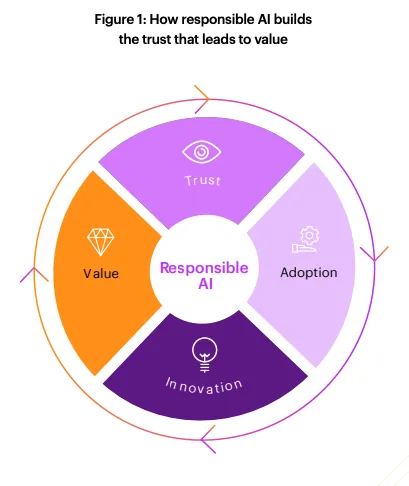
Moving beyond basic risk management, leading organizations have discovered that responsible AI frameworks drive cost efficiency. Accenture research demonstrates that organizations with mature responsible AI practices achieve greater cost efficiencies. These efficiency gains emerge from concrete operational improvements: increased model accuracy reduces errors and rework; automated monitoring identifies potential issues before they escalate; and consistent documentation practices streamline regulatory compliance, avoiding penalties. Accenture’s responsible AI compliance program led to 800% YoY GenAI revenue growth from generative AI.
AI maturity—and enhanced cost benefits—emerge from multiple dimensions of responsible AI implementation, including improved model performance requiring less maintenance, higher quality data driving better business decisions, streamlined compliance processes reducing regulatory overhead, and strengthened stakeholder trust accelerating adoption and ROI.
Prioritize Data Governance from the Outset
Organizations cannot achieve sustainable AI cost efficiency without robust data governance practices. Poor data quality drives up costs through:
- Increased model training requirements
- Higher error rates necessitating human intervention
- Compliance remediation expenses
- Decreased business user trust, slowing adoption
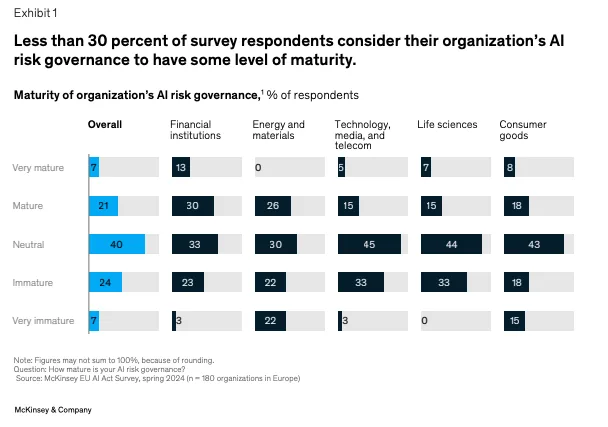
McKinsey's research identifies that organizations prioritizing data governance from the outset achieve AI implementations more efficiently than reactively addressing data issues. However, it also found that less than 30% of survey respondents in the EU consider their AI risk governance has “some level of maturity.”
Pillar 3: Invest in Talent, Technology, and Systems
The third pillar addresses how talent and technology decisions directly impact AI cost efficiency, recognizing that the right investments in people and systems create multiplicative returns.
AI Talent: Upskill, Hire, or Borrow?
When deciding whether to upskill, hire, or borrow talent to address AI talent needs, Gartner’s research is blunt: “Organizations that focus their talent strategies on hiring outside AI-skilled employees are significantly more likely to become leading AI finance organizations.”
“Organizations that focus their talent strategies on hiring outside AI-skilled employees are significantly more likely to become leading AI finance organizations.”
—Gartner
External experts bring immediate specialized knowledge that prevents costly implementation mistakes and accelerates time-to-value. Meanwhile, internal talent development can also create sustained cost advantages through:
- Reduced dependency on expensive external consultants
- Enhanced ability to customize AI solutions for specific business needs
- Improved institutional knowledge retention, preventing repeated mistakes
- Greater employee engagement reduces turnover-related costs
Make It Scaleable
Technology selection directly impacts AI cost efficiency as enterprises seek to maximize returns while minimizing expenses. Organizations achieving the greatest AI cost benefits embrace scalable, cost-effective solutions prioritizing flexibility and operational streamlining. The most successful implementations utilize open-source tools to reduce licensing expenses while leveraging cloud-based platforms that enable precise scaling based on actual usage rather than peak capacity requirements. This approach seeks to minimize upfront capital expenditures while creating a strong technical foundation that can scale efficiently.
The technology architecture decisions made early in AI implementation have profound long-term cost implications for ROI. Forward-thinking organizations increasingly employ “containerization” for consistent development and deployment across environments, substantially reducing the integration costs that often plague AI scaling efforts. Simultaneously, they implement MLOps practices that automate model monitoring, retraining, and deployment processes, dramatically reducing the operational overhead that typically grows as AI systems expand.
Balancing Automation and Workplace Impact—Considerations
The most challenging aspect of AI cost efficiency involves balancing automation benefits against workforce impacts. Organizations must develop comprehensive reskilling strategies that transform potential displacement costs into organizational advantages.
The financial equation extends beyond simple headcount reduction to consider:
- Knowledge transfer costs during transitions
- Productivity impacts during change periods
- Recruiting expenses for new skill requirements
- Potential severance and outplacement costs
- Cultural and morale impacts affecting broader performance
Wipro's partnership with Microsoft demonstrates how proactive workforce transformation that balances automation with human capability development creates superior cost outcomes compared to reactive approaches focused solely on headcount reduction.
Continuous Monitoring
Sustainable AI cost optimization requires ongoing measurement and refinement through:
- Clear KPIs tied to business outcomes
- Regular performance reviews
- Systematic feedback loops
- Continuous model optimization
- Technology stack evolution as capabilities mature
Organizations that establish these monitoring mechanisms achieve lower total cost of ownership for their AI systems compared to those taking a "set it and forget it" approach, according to Virtasant's research.
Pillar 4: Implement a Phased Approach
The fourth pillar focuses on implementation methodology, recognizing that a path to AI adoption based on pilot projects and a phased roll-out significantly impacts cost efficiency outcomes.
The Financial Logic of Focused Pilot Projects
Organizations achieve the greatest AI cost efficiency by beginning with focused pilot projects in high-impact areas, allowing for:
- Lower initial investment requirements
- Faster iteration and learning cycles
- Reduced risk exposure
- Earlier identification of implementation challenges
- Quicker wins that generate resources for expansion
PYMNTS research confirms that organizations starting with basic finance and procurement functions often achieve the most immediate cost savings, creating financial capacity and organizational momentum for broader AI initiatives.
The Crawl-Walk-Run Strategy
Jeffrey Stangle, Director of Product at Coupa, recommends a "crawl-walk-run strategy to AI adoption" that maximizes cost efficiency while minimizing risk:
- Crawl: Start with core automation in finance and procurement functions, where direct cost savings are most immediate and measurable
- Walk: Experiment with cross-functional AI applications and begin piloting GenAI solutions with select teams
- Run: Scale GenAI across the organization once tested and integrated into governance frameworks
This phased approach prevents costly over-investment and promotes iterative learning and adaptation. Companies like McKinsey have demonstrated how this methodical approach to building internal GenAI platforms delivers superior cost efficiency compared to rushed, enterprise-wide deployments.
Case Study: Morgan Stanley's Iterative Efficiency Gains
Morgan Stanley's approach to AI implementation demonstrates how phased adoption drives exceptional cost efficiency. Their AI-powered financial advisor platform began with modest capabilities but evolved through continuous refinement to deliver exponentially greater value with incrementally lower marginal costs.
As David Wu, Head of Firmwide AI Product & Architecture Strategy at Morgan Stanley, explains: "We went from being able to answer 7,000 questions to a place where we can now effectively answer any question from a corpus of 100,000 documents." This progression illustrates how iterative implementation creates compound efficiency gains that are impossible to achieve through "big bang" approaches.
The Integrated Approach to AI Cost Efficiency
The four pillars outlined above provide a comprehensive framework for maximizing the return on AI investments while minimizing costs and risks. By integrating strategic visioning, governance, talent development, and phased implementation, organizations can transform AI from a significant expense into a powerful driver of cost efficiency.
For CFOs and business leaders embarking on the AI journey, these pillars offer a theoretical framework and a practical roadmap for achieving sustainable AI cost efficiency. The organizations that master this integrated approach stand to realize exponential benefits: Meta's 201% net income increase and Morgan Stanley's 100,000-document knowledge base exemplify what's possible when AI is implemented with strategic cost efficiency at its core.